

Cultural Authority
WHY IT MATTERS WHO SPEAKS ABOUT WILD GAME
CONTENTS
If you want to understand the relationship between Aboriginal culture and wild game, you need to start in the right place. Not with statistics. Not with policy. With the question of who is speaking, and whether they have the authority to do so.
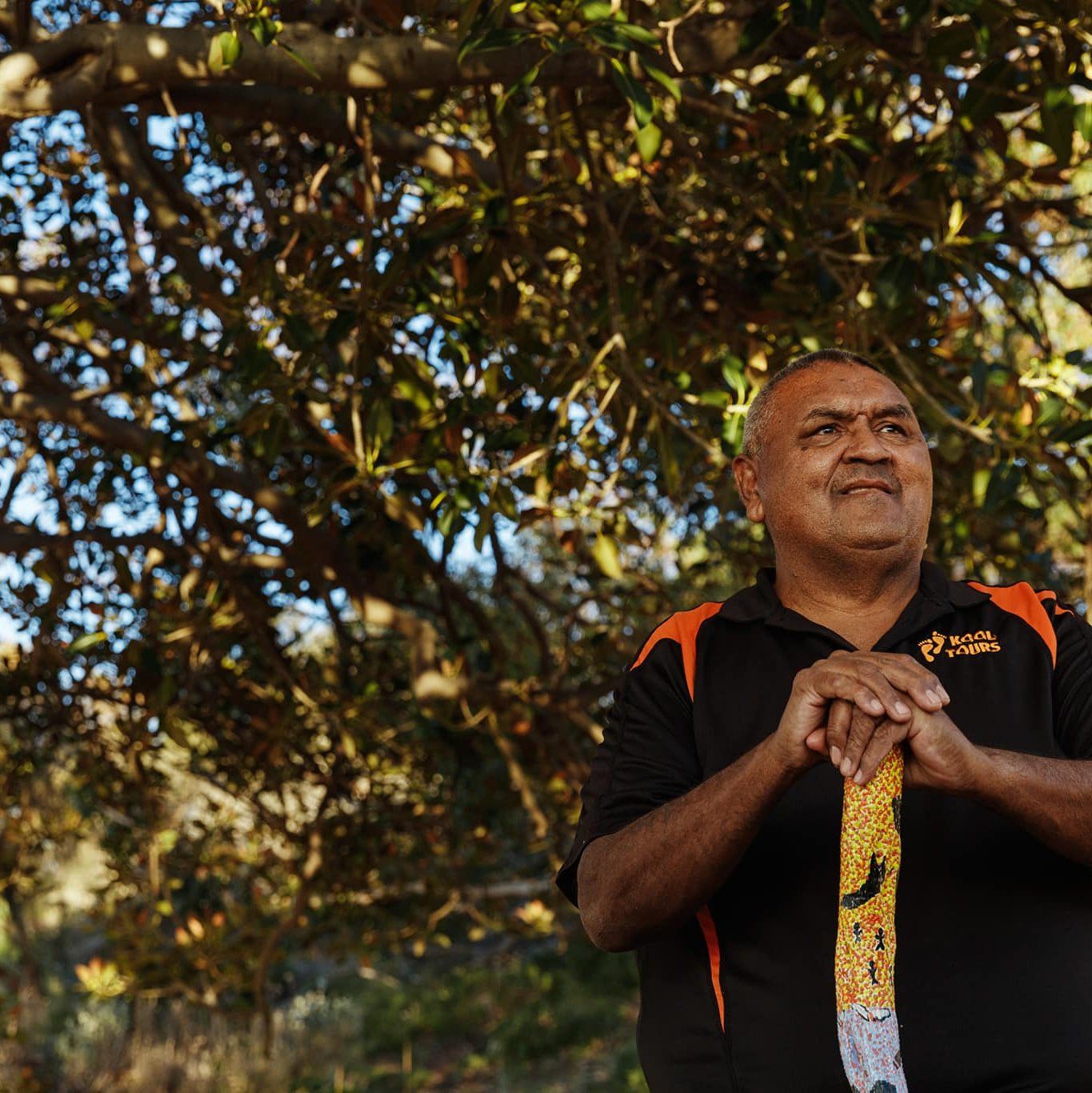
Mark Koolmatrie has spent a lifetime earning that authority. Although he has completed his post graduate studies, his knowledge hasn't come from formal education. It has been handed down through generations, earned through years of listening, and tested against a cultural standard that has endured for tens of thousands of years.
"When someone speaks with cultural authority, that's end of story," Mark says. "They are speaking because they are coming with facts. When they speak, they don't speak for no reason, they speak with cultural authority."
The misunderstanding of who has cultural authority is at the heart of many of the difficulties faced when Aboriginal knowledge is sought, claimed, or debated in public life.
The Difference Between an Elder and an Older Person
One of the most important distinctions Mark draws is one that is frequently overlooked: not every Aboriginal person who is old is an elder.
"Eldership comes with knowledge and wisdom. It is not something that anybody can just call someone an elder."
The confusion, he says, often comes from good intentions. People use the title "elder" as a sign of respect. But in doing so, they can inadvertently elevate voices that don't carry the cultural weight the moment requires.
"Quite often people are thinking they're being respectful by calling someone an elder. Wherein, in actual fact, their knowledge base, or more so their cultural knowledge base, is not in the realm of eldership. So to be classed as an elder, or to have eldership, you must have knowledge and wisdom. If you don't have that, quite often you might be just an older or older person speaking."
The distinction matters enormously when it comes to wild game. Questions about how Aboriginal people relate to kangaroo, to harvesting, to country and sustainability are not casual questions. They deserve specialist answers.
"If you think about going to a doctor, and if you want professional advice, you would go to a specialist. And this is where the difference occurs. So what we're asking for is the specialists to come forward [regarding wild game], who can back up any information that they're given."
A System Built on Truth
The standard of cultural authority leans on accountability. In traditional Aboriginal governance, speaking without genuine knowledge carried consequences.
"If you don't have the knowledge, or if you're talking off the cuff about many things when you are not a specialist, those sort of things are not listened to. Culturally, you're dismissed from your position of eldership if you're not following through on truth, reliability, knowledge. Everything is based on knowledge."
This is why, Mark explains, when a genuine elder speaks on matters within their area of expertise, their words carry such weight.
"When the specialist speaks, we take it on that they are speaking the truth. It is a part of who we are. We must be able to, when we speak, we must speak truth."
The Yannarumi: A Circle of Knowledge
To understand how cultural authority was maintained and passed on, Mark describes a traditional governance system known as the Yannarumi — a circle of knowledge holders that formed the original structure of Aboriginal decision-making.
"The Yannarumi was our form of government, where we sat in circle, where the inner circle was the high law, the high knowledge people. And as that circle went out, groups of people sat around — you might be learning things, you're learning how to do it — until everyone could come forward with their piece of knowledge."
It was a system that was deliberate, layered, and deeply patient. No one stepped into the inner circle before their time. Mark himself describes sitting at the outer edges of this circle for years, listening and learning before it was his turn to speak.
"I have sat in the outer realm of this Yannarumi, where I've listened to what other elders and other people of knowledge have told me. And then it has come a time when it is my turn to come forward into that circle and share the knowledge widely. You just don't come in out of the blue and speak. You must have the knowledge to be able to step forward to speak."
What Mark shares now, he shares with that full weight behind him.
"When I speak, I speak with authority, but I speak with generations of knowledge that have been handed down to me. I've also had to sit and wait until it was my turn to come forward and share what I know. I don't share what I don't know. I share what I do know, and I share what's been passed down and handed to me over centuries of knowledge."
What This Means for the Wild Game Industry
For those working in the Australian wild game industry (harvesters, processors, advocates, and policymakers) understanding cultural authority isn't just a matter of respect. It's a matter of getting the right information.
When the industry seeks Aboriginal voices on matters of wild game, harvesting practice, land management, or cultural protocol, the quality of that engagement depends on whether the right people are in the room. A well-meaning conversation with someone who lacks genuine cultural knowledge may not only be unhelpful, it may actually muddy the waters on questions where clarity and truth are essential.
The Yannarumi model offers a useful lens here. In that system, questions were directed to the person with genuine expertise in that area, not simply the most available or most vocal voice. The specialist was sought out. The knowledge was treated as something precious, not something to be casually substituted.
"Not everyone is a specialist in every single area," Mark acknowledges.
"However, there are people even within our original society — the way we conducted that tribalism, the way we sat in circle — it is more about that specialist in that area speaking for that one, whether or not it's wild game, whether or not it's foods or medicines or whatever it might be. We listen to the specialist."
The Australian Wild Game Industry Council is committed to listening to the specialists, and ensuring that the Aboriginal voices informing this industry are voices of genuine cultural authority.
Mark Koolmatrie is one of those voices.
MORE INSIGHTS